

Awkward Group Chat Moments and What to Send Next
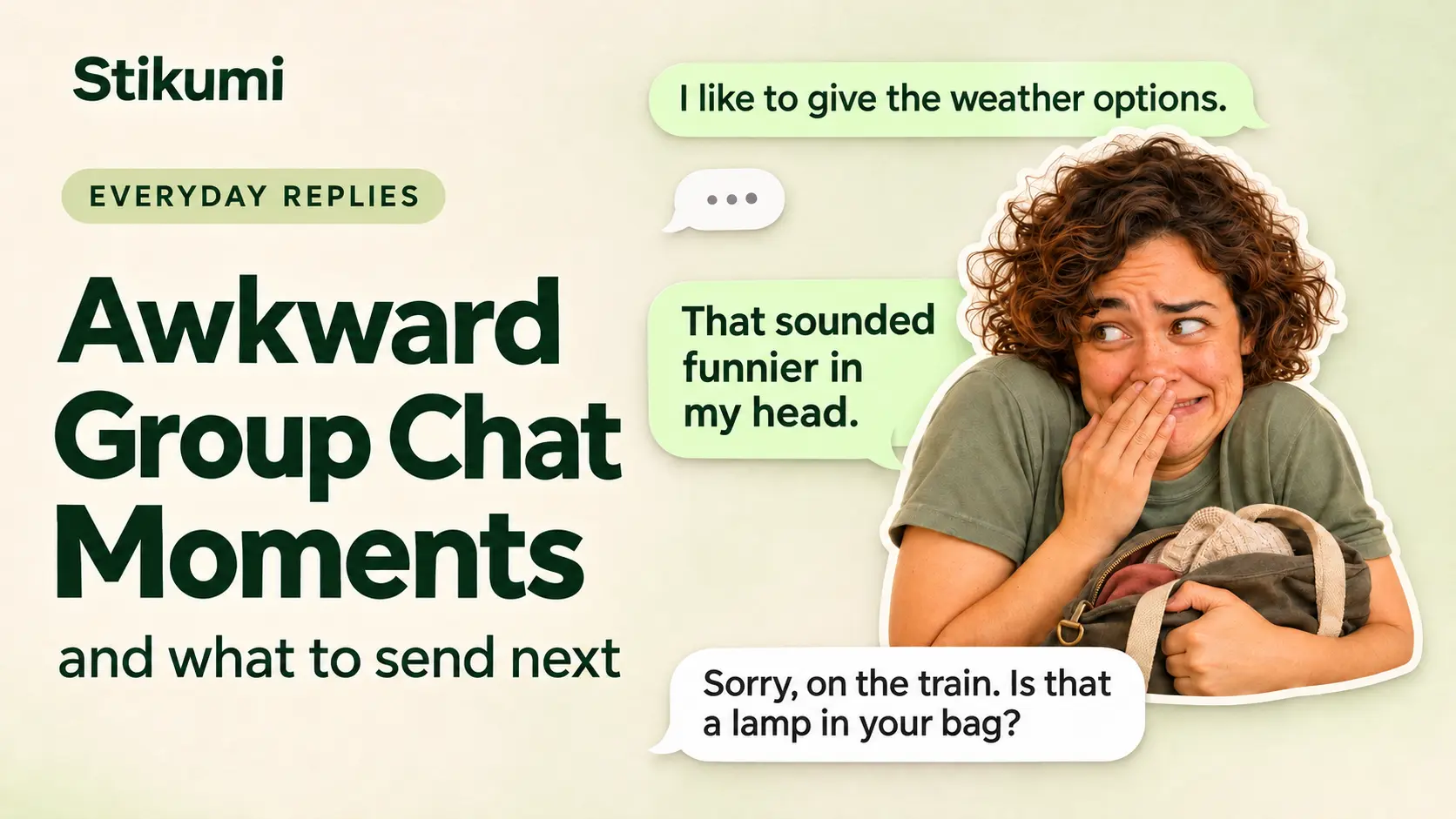
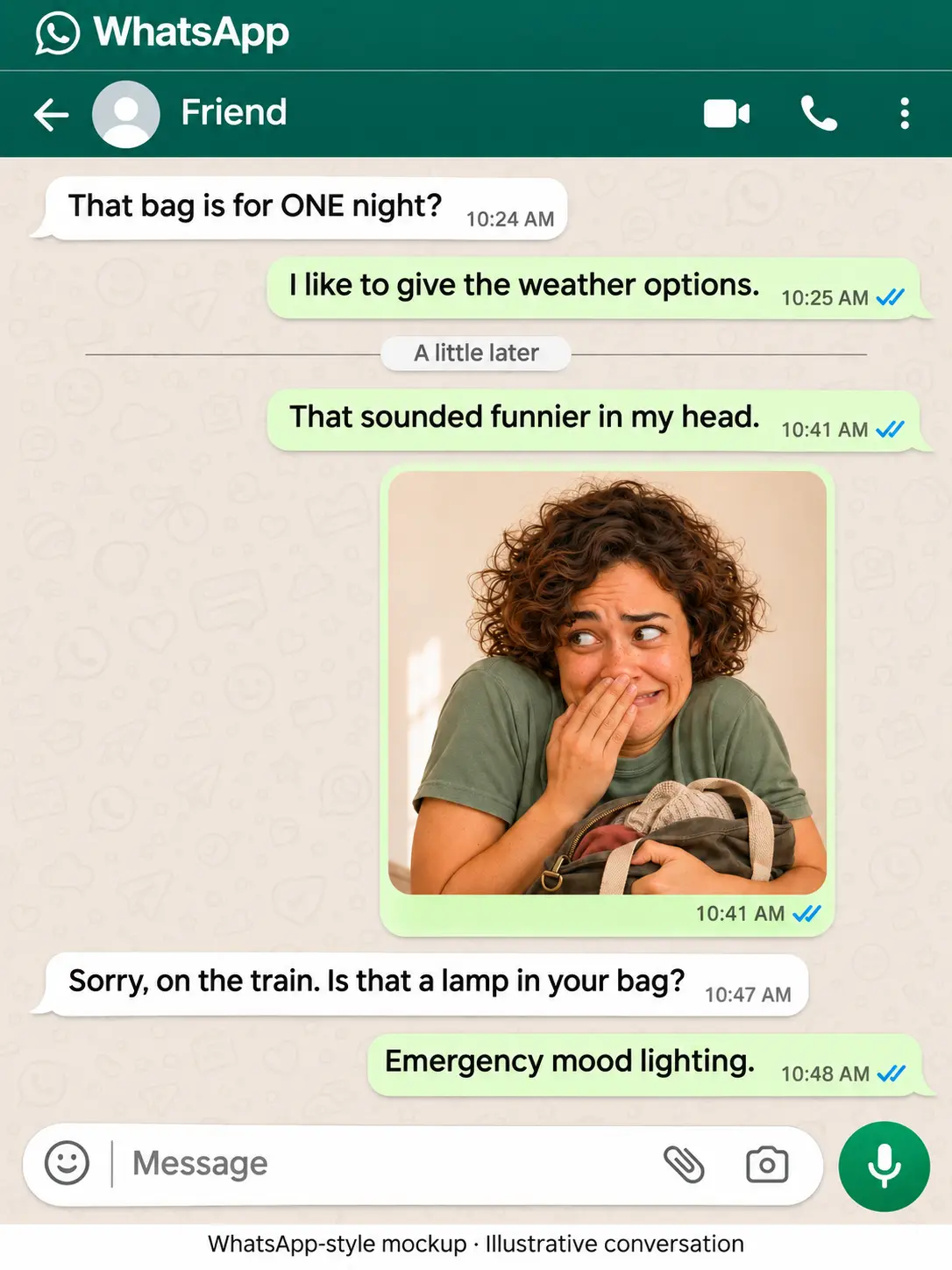
You send a photo of your bag for a one-night trip. It is large enough to suggest a change of address. Someone asks whether you’re bringing the entire wardrobe, and you reply, “I like to give the weather options.”
Then the chat goes quiet. You put the phone down, pick it up again, and begin composing a second message that explains a joke nobody asked you to explain. A minute ago you were packing a jumper. Now you’re reviewing your entire sense of humour.
That small pause can feel oddly loud when your message is the last one on the screen. Sometimes a sheepish sticker is a good way to acknowledge it. Sometimes a plain question gets you back into the conversation. And sometimes everyone has simply put their phone down.
Here are six familiar group chat moments, with replies you can borrow and ways to choose a reaction that feels like you.
1. Your joke is still waiting for an audience
The urge to follow up is understandable. There is your perfectly harmless joke, sitting beneath a picture of an overstuffed bag, and there is all that empty space underneath it. You could send “Anyone?” You could add three laughing faces, just to establish that laughter was the intended response. Neither is likely to make you enjoy the pause more.
If you want to say something, try “That sounded funnier in my head.” Add a small, embarrassed smile or a glance to the side, the face you would make across a table when you know you’ve stretched a joke a little too far. Keep the joke on yourself rather than making your friends explain why they didn’t laugh.
One follow-up is plenty. Go back to packing. You still have to work out why you’ve brought two chargers and no socks.
When a friend eventually returns with “Sorry, was on the train. Is that a lamp in your bag?”, the chat has somewhere new to go. If nobody returns for a while, you can leave your little sideways glance where it is. It doesn’t need a sequel.
2. Someone tags you halfway through a conversation
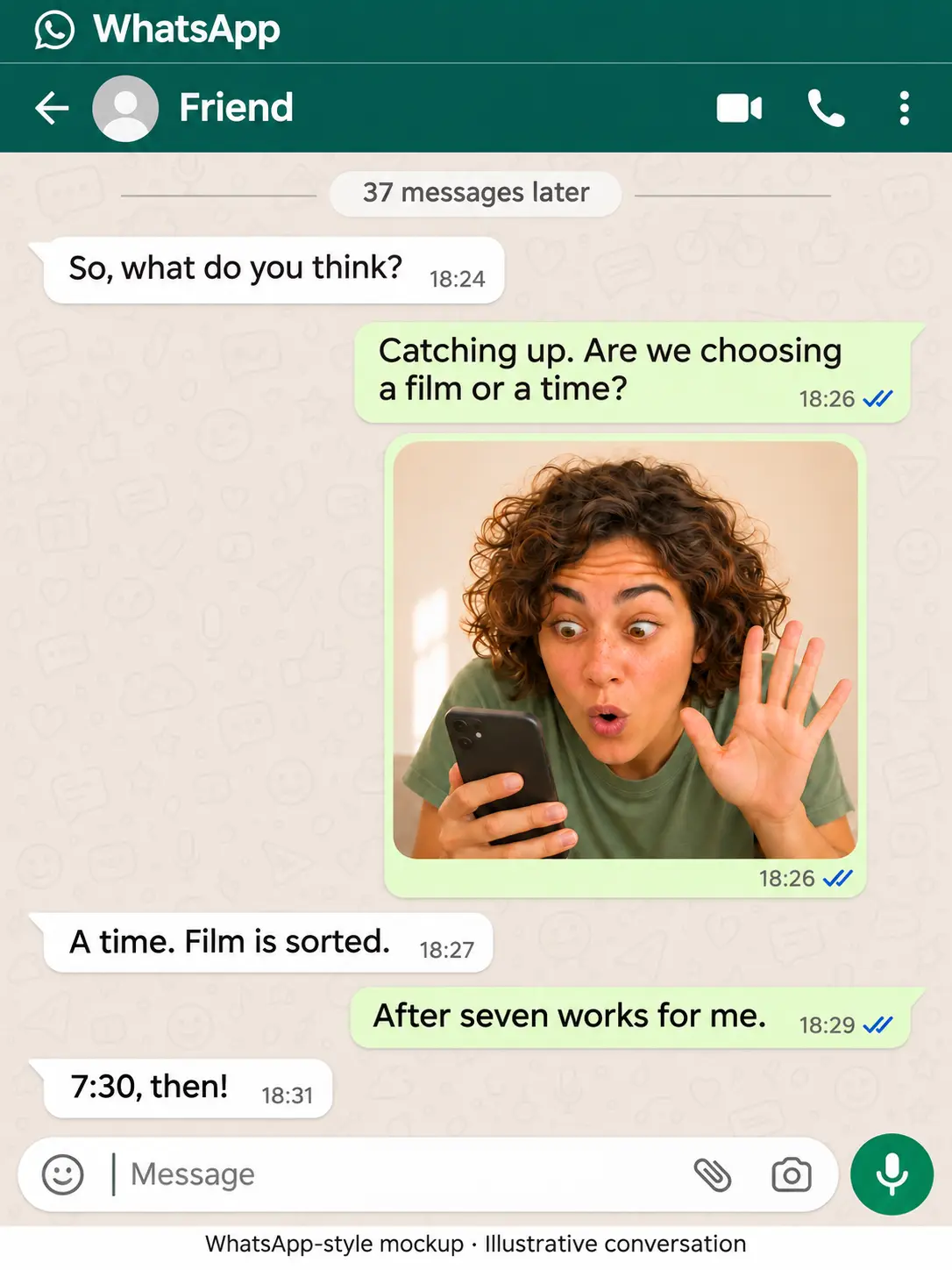
You open your phone to thirty-seven messages and “What do you think?” The last thing you remember, your friends were choosing a film. Since then, someone has mentioned Saturday, someone has ruled out a cinema, and someone has sent a photograph of a very small dog. Your name is now attached to a decision you haven’t located yet.
“Catching up. Are we choosing a film or a time?” is a perfectly good entrance. A wide-eyed or blinking reaction can go beside it, giving your friends a glimpse of the expression you’re wearing while you scroll. You don’t have to pretend you followed every turn.
“A time. Film’s sorted,” someone replies. Now you can give them the useful part: “After seven works for me.” If they were asking for your opinion on the film, you can answer that instead. The whole exchange can be brief once you know which conversation you’ve walked into.
When the missing piece is smaller, name it: “Wait, whose place are we meeting at?” A question gives people something to answer. A puzzled face alone may just leave them puzzling back.
3. Everyone has a strong opinion except you
The group has finished the last episode of a series. One friend loved the ending. Another is already proposing a better one. You watched it ten minutes ago and are still trying to work out whether that final scene was moving or just very well lit.
Then comes “You’ve gone quiet. Thoughts?” You could pick a side to keep things moving, but you don’t really have one yet.
“Still deciding how I feel about that ending. The last scene got me, though.” That gives your friends something to respond to. A thoughtful stare or a hesitant little shrug fits better than an eye-roll, which could look as if you’re judging the people who loved it.
You can also ask about the part that stayed with you: “Did you think she was actually going to leave?” Now there is something specific to talk about, and you can listen without inventing a verdict on the entire season.
4. You misread the plan
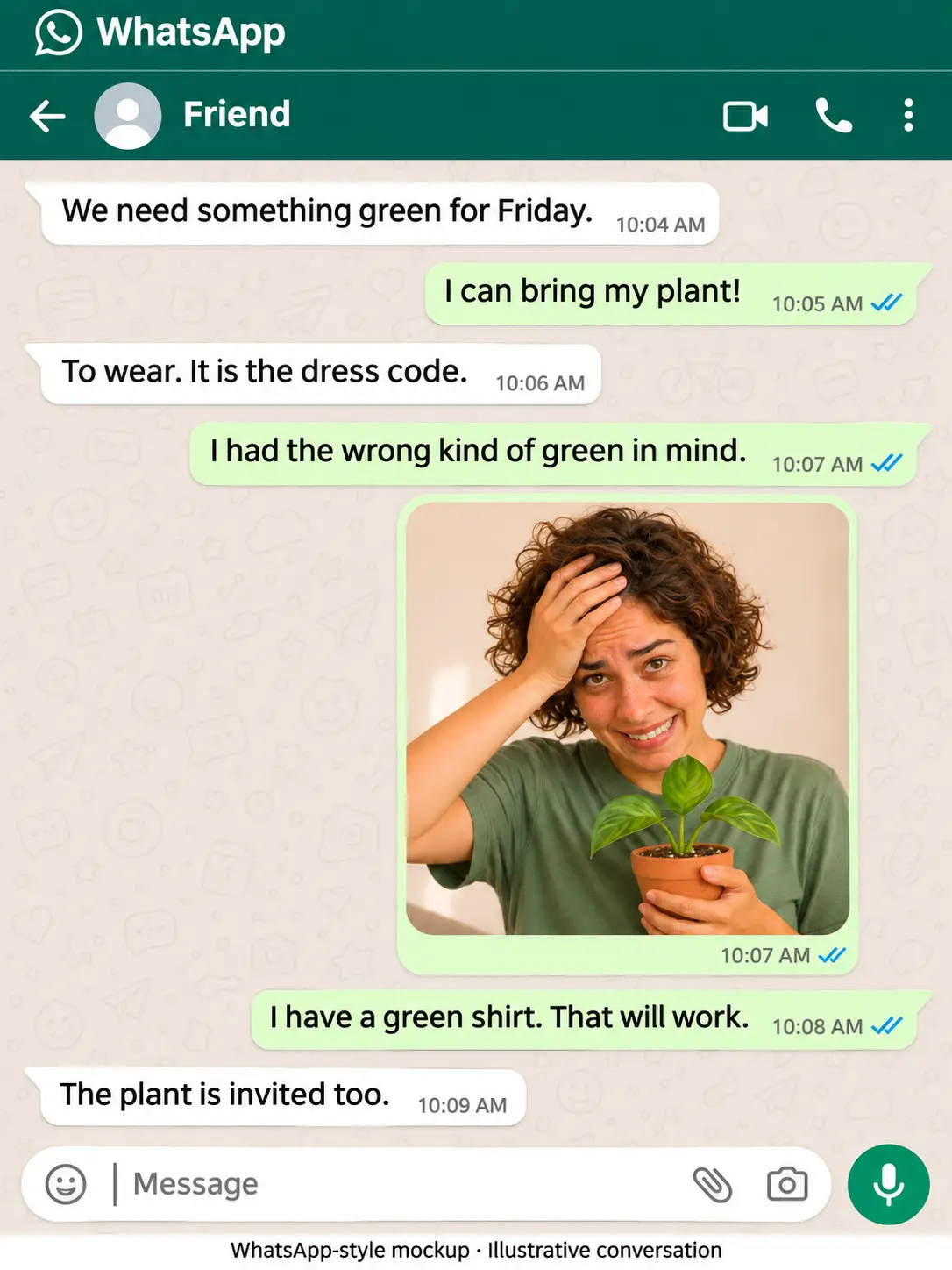
“We need something green for Friday,” your friend writes. You are delighted to be useful. You send a photo of the plant by your window and offer to bring it along. There is a pause, followed by: “To wear. It’s the dress code.”
You look from the message to the plant. It has grown quite a lot since you bought it. Wearing it would be a commitment.
“Right. I had the wrong kind of green in mind.” A sheepish grin is all the extra commentary you need. Then deal with the actual plan: “I’ve got a green shirt. That’ll work.”
There is room for a second joke if your friends pick it up. Someone might insist the plant deserves an invitation anyway. You might offer it the spare seat. But the correction has already happened, so nobody has to keep steering you back to the dress code.
For a smaller mix-up, “Ah, I read that as Sunday. Saturday works” does the same job. Correct the part that matters, then let your expression admit the brief, very human detour.
5. You want to change the subject
Two friends have been debating the best song on an album for long enough that you’ve listened to both contenders again. Their positions have not changed. You like the album, you like your friends, and you would also quite like to talk about something else.
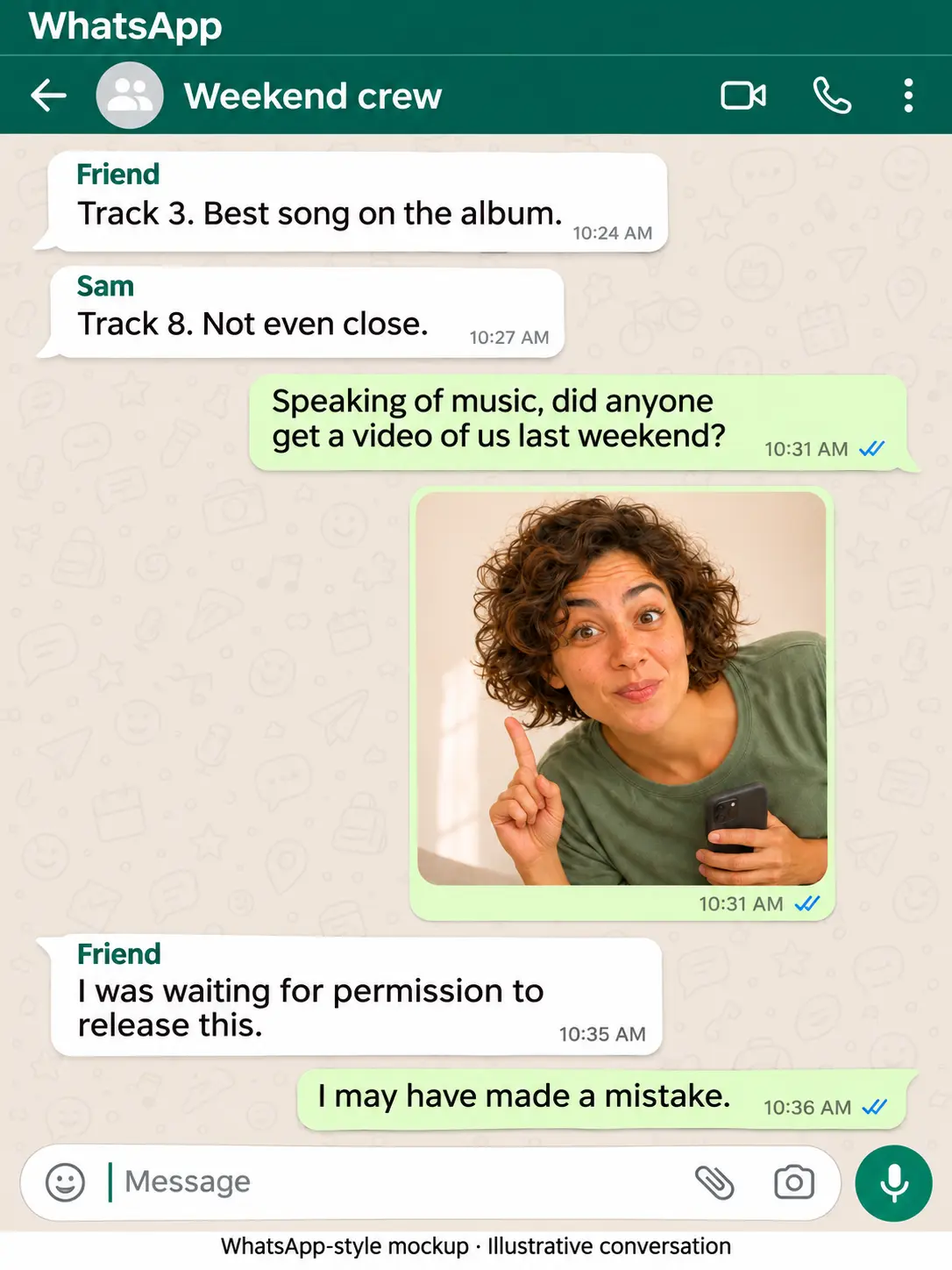
You don’t need to announce that the discussion has expired. Look for a small connection to something the group shares. “Speaking of music, did anyone get a video of our attempt at that chorus last weekend?” works because it offers them another memory to step into.
A hopeful little wave can suit the change of subject. Save the dramatically bored face for a group where you know it will land well; next to somebody’s enthusiastic explanation, it can be a colder entrance than you meant.
The friend with the video replies, “I was waiting for permission to release this.” You send a sideways glance and “I may have made a mistake.” The original argument can resume whenever it likes. For now, there is a clip of six people discovering they only know the first line.
6. The conversation has simply come to a pause
There are quiet patches you can leave alone. The plan is settled, somebody has reacted to the last photo, and the conversation has run out of things it needs to do for the moment. Your message happens to be at the bottom.
Before you send a rescue message, read what you actually wrote. Did you ask something that still needs an answer? If you need a headcount by tonight, a clear “Can you let me know by six?” is useful. If you only made a passing comment, it can stay there without an attendance check.
You can close warmly if you’re heading off: “Right, back to packing. See you tomorrow.” A small wave works nicely. Or you can put the phone in your pocket and go without a sign-off. Your friends can carry on whenever they’re free.
Later, someone sends a picture of their cat asleep inside a suitcase. You have an opinion about this packing strategy. The chat is back, and nobody needed to account for the missing hour.
If the quiet followed a hurtful remark or serious news, respond to that directly. An apology, a kind question or an offer to listen deserves its own words. The light reactions here are for the small stumbles between friends.
Give your awkward little pause a familiar face
You probably recognise your own version of these moments: the sideways look when a joke stalls, the blink while you catch up, the grin when you realise what you’ve misread. Your friends have seen those expressions across tables and from the other end of the sofa. There is something pleasing about letting a sticker look like the person who would actually make that face.
Stikumi lets you choose a template, add a photo of yourself or your pet, and generate a whole sticker pack. Start with a face your group already knows: you in a favourite photo, or the cat who has appointed herself head of luggage inspection. Look through the results for a reaction you can already imagine sending.




Keep a couple of your usual replies in mind as you choose. “Catching up” beside a wide-eyed look. “I read that wrong” beside an embarrassed grin. Let the words live in the message, with the sticker alongside them.
Pick the moment that happens to you most often, then make a pack you’ll be glad to have when it comes round again.
Download StikumiRelated articles
Tired of Replying “Got It”? 8 Sticker Ideas for Everyday Chats
Find sticker ideas for eight everyday chats, with examples for saying thanks, clearing up plans, cheering on friends and making reactions your own.